Ever get to the end of the month and think, “Where did all my money go?”
You thought you were sticking to your budget, but somehow, between takeout, Dollar Tree runs, and a couple of “just one thing” Target trips, it’s gone.
For me, impulse buying isn’t some wild shopping spree. It’s little moments that add up way too fast. Like ordering takeout because I’m exhausted and just can’t cook another meal. Or going into Dollar General for one thing and walking out with $75 worth of stuff I didn’t even plan to buy.
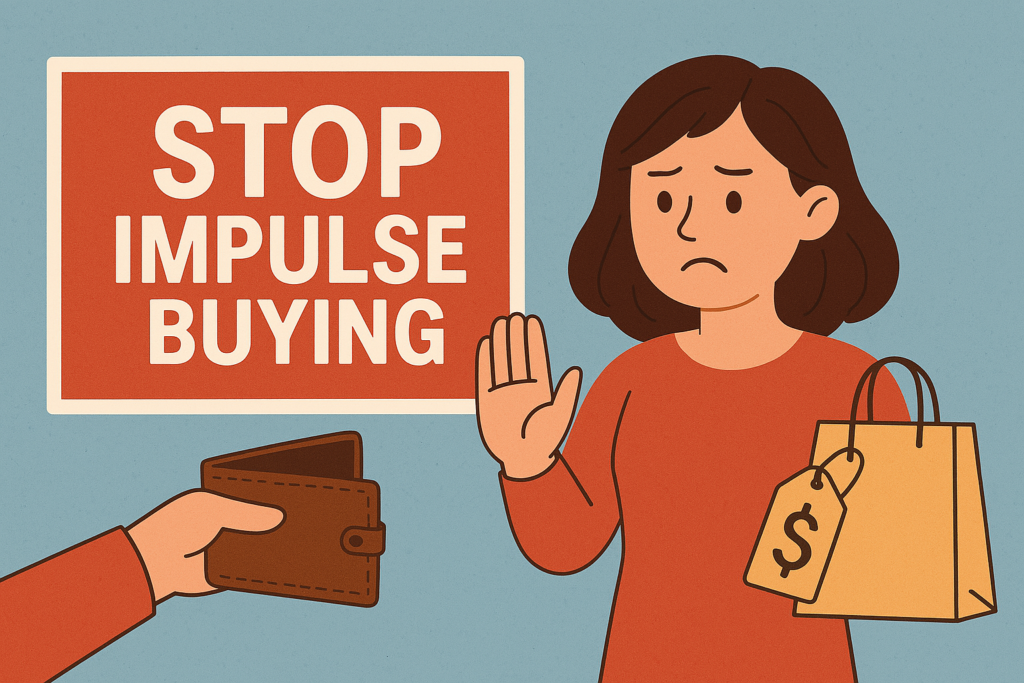
Impulse buying might feel harmless in the moment, but it’s one of the biggest reasons budgets fail. If you’re trying to save, pay off debt, or finally stop feeling broke, this is the habit to start breaking. These ten strategies will help you stop impulse buying, save more, and feel in control of your money again.
1. Take a Mental Pause Before You Buy
Impulse spending happens because we don’t give ourselves time to think. It’s all reaction. You see it, you want it, and suddenly it’s in your cart.
The next time you feel that pull, pause. Ask yourself, “Do I actually need this? Will I care about it tomorrow?” That one pause can make a huge difference.
2. Make a List and Stick to It
Impulse buying loves when there’s no plan. Whether you’re heading to the grocery store or hopping online, go in with a list and stick to it.
Meal plan before you shop. Write down what you need. Only allow yourself to buy what’s on that list. It might sound simple, but it’s powerful.
And if you’re really struggling to rein it in, my No-Spend Challenge Workbook can help you stay focused and committed to spending less.
3. Unsubscribe from Retail Emails
Those “flash sale” and “limited-time offer” emails are designed to get you to spend. That’s their entire job.
If your inbox is full of temptation, take 10 minutes to unsubscribe from the stores that always pull you in. Out of sight, out of mind.
4. Use Cash Only When You Shop
Swiping a card doesn’t feel real. But handing over actual cash? That hits different.
Set a weekly spending limit, withdraw the cash, and when it’s gone—it’s gone. This helps create stronger boundaries and cuts down on spontaneous swiping.
5. Find Budget-Friendly Alternatives
If you’re eyeing something big, like a new coat or tech gadget, see if there’s a lower-cost alternative that still gives you what you want. Sometimes it’s not about the thing—it’s about the feeling.
Instead of buying the expensive version, ask yourself how you can recreate the same vibe for less.
6. Set Financial Goals and Visual Reminders
Saving for something big can be one of the strongest antidotes to impulse buying. Put your goal somewhere you’ll see it every day—on your fridge, planner, phone background.
Every time you’re tempted to buy something unnecessary, ask yourself: “Does this help me reach that goal?” Usually, the answer is no.
7. Don’t Shop When You’re Emotional or Bored
Impulse buying is often emotional. Stress, boredom, anxiety – all of it can push us to spend money as a way to cope.
Before you open that app or step into a store, check in with yourself. What are you really feeling? And what could help instead? Take a walk, call someone, journal, or just pause.
8. Use the 24-Hour Rule
See something you want? Wait 24 hours.
Let it sit. Don’t add it to your cart. Don’t check out. Just wait.
Most of the time, you’ll realize you didn’t need it after all. But if you still want it the next day—and it fits in your budget—then at least you made the choice intentionally.
9. Don’t Fall for “It’s on Sale!”
Just because something is 50% off doesn’t make it a good purchase. If you didn’t plan to buy it in the first place, you’re still spending unnecessarily.
Before you grab something just because it’s on sale, ask yourself, “Would I pay full price for this?” If not, it’s not worth it.
10. Keep a Wish List
Sometimes we want something, but we know it’s not urgent. That’s where a wish list comes in handy.
Write it down. Give it space. If weeks go by and you’re still thinking about it, then you can plan for it. If not, you saved yourself money without even feeling it. Download the free wish list printable down below!

Final Thoughts: You Can Break the Impulse Buying Habit
Breaking the habit doesn’t happen overnight. But it does happen one decision at a time.
You don’t need to be perfect. You just need to get a little more intentional with how you spend. Every step away from impulse buying is a step toward peace, savings, and control over your money.
If you need help getting started, my No-Spend Challenge Workbook can give you the structure and support to stop overspending and start stacking real wins.
