Table of Contents
Alright, mama, let’s talk about something that can seriously change the way you handle your money: using a weekly spending tracker. I know, I know, tracking your spending doesn’t sound like the most exciting thing to do. But I promise, once you start using a tracker to see where your money’s actually going, you’ll never go back to being in the dark about your spending habits. It’s one of the most powerful tools you can use when starting your budgeting journey, and it’s something I always recommend to anyone who feels overwhelmed by managing their finances.
Why Tracking Your Spending Matters
The first step to getting your finances under control is understanding where your money is going. It’s easy to think you know, but the reality is often very different. You might think you’re doing fine, but then realize you’ve been mindlessly swiping your card for things that add up. Or maybe it’s the small expenses, those random coffee runs or the “just because” takeout orders that really kill your budget. When you track your spending, you’re not just guessing. You’re seeing where your money’s going, and that’s the key to making changes.
Using free weekly spending trackers is the best way to get started. It helps you set a clear picture of your weekly expenses and gives you insight into how you can cut back and make smarter financial choices. Whether you’re budgeting for the first time or looking to tweak your current system, tracking your spending gives you clarity and control.

What’s Inside a Weekly Spending Tracker?
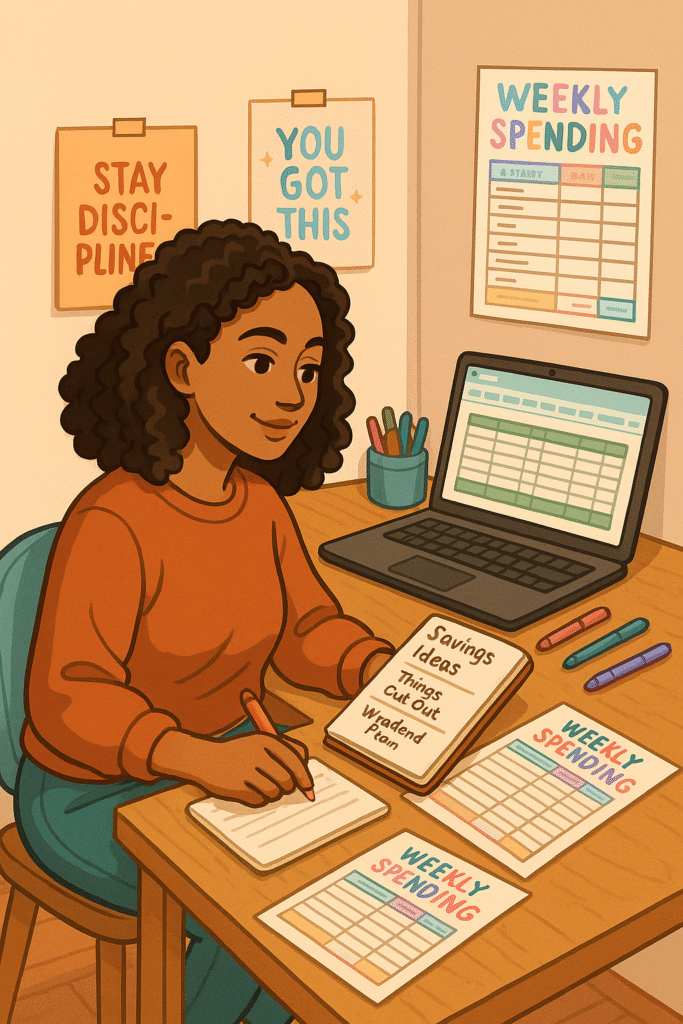
The reason I love using free weekly spending trackers is that they make it easy to write down every little expense. There’s something powerful about seeing it all laid out on paper (or on a printable you can keep handy). I’ve designed these trackers to help you stay organized and focus on what really matters in your budget.
When you start filling out your tracker, you’ll have space to jot down things like:
- Things to Cut Out: This is your opportunity to see where you might be overspending and identify areas you can cut back. Maybe it’s eating out too often or buying things on impulse. Once you spot these habits, you can work on making a change.
- Savings Ideas: Each week, your tracker will give you space to brainstorm ways you can save. Whether it’s cutting back on a certain expense or planning ahead for something you know is coming up, this section helps you stay proactive about saving money.
- For Next Week: A lot of times, we end up overspending because we don’t have a plan. By writing down “For Next Week,” you can remind yourself of your upcoming goals and what you need to prioritize in your budget. Whether it’s saving for a birthday, a holiday, or a bill, this section helps you stay focused on your financial goals.
These sections help you create a more well-rounded view of your finances. It’s not just about writing down your expenses; it’s about taking control, seeing the bigger picture, and making informed choices. It also helps you develop a proactive mindset, which is essential when it comes to budgeting.

How This Helps You Set a Budget
Okay, so how does tracking spending tie into setting a budget? Let’s break it down. When you’re first starting out with budgeting, you need to get a real sense of how much you spend and where your money is going. That’s why I recommend using a weekly spending tracker as the starting point.
Most people dive into budgeting by setting limits on categories like food, entertainment, or transportation, but without tracking, those numbers can be pretty arbitrary. How do you know what to set if you don’t have a clear picture of your spending? That’s where a tracker comes in.
After a few weeks of tracking your spending, you’ll be able to identify patterns. Maybe you realize you’re spending more on gas than you thought, or that you’re eating out way too often. You can then use this information to set more realistic, achievable budget goals based on your actual habits, rather than guessing or just picking numbers out of thin air.
Once you have that foundation of knowledge, you’ll have a much better idea of how to allocate your money each month, and what changes you need to make to meet your goals.

Start Your Budgeting Journey with Confidence
A lot of people feel overwhelmed when they first start budgeting because they don’t know where to begin. That’s why I always suggest starting with a spending tracker. It’s a simple tool that provides clarity, and it’s the perfect way to dip your toes into budgeting without diving headfirst into complicated spreadsheets or formulas.
Once you see how much you’re really spending, you’ll be more motivated to set up a budget that actually works for you. You’ll be able to see the areas where you’re leaking money and decide where to focus your efforts to start saving. It gives you the confidence to take control of your money and set a budget that’s not just realistic but actually doable.
Download Your Free Weekly Spending Tracker Printables
Ready to get started? I’ve got you covered! To make this as easy as possible, I’m giving away three super cute, free weekly spending tracker printables. They’re simple to use, and the best part? They’re totally free. All you need to do is click the picture at the end of this post to grab your download and start tracking your spending today!
Track, Cut Back, and Save
By using these trackers, you’ll have the tools you need to start making real changes in your budget. Trust me, mama, this is the best way to begin your budgeting journey. Once you’ve got a clear picture of your spending habits, the rest of the budgeting process gets a whole lot easier.
So don’t wait. Download your free spending tracker printable now and start taking control of your finances today!
Download your FREE Weekly Spending Trackers below!
