Table of Contents
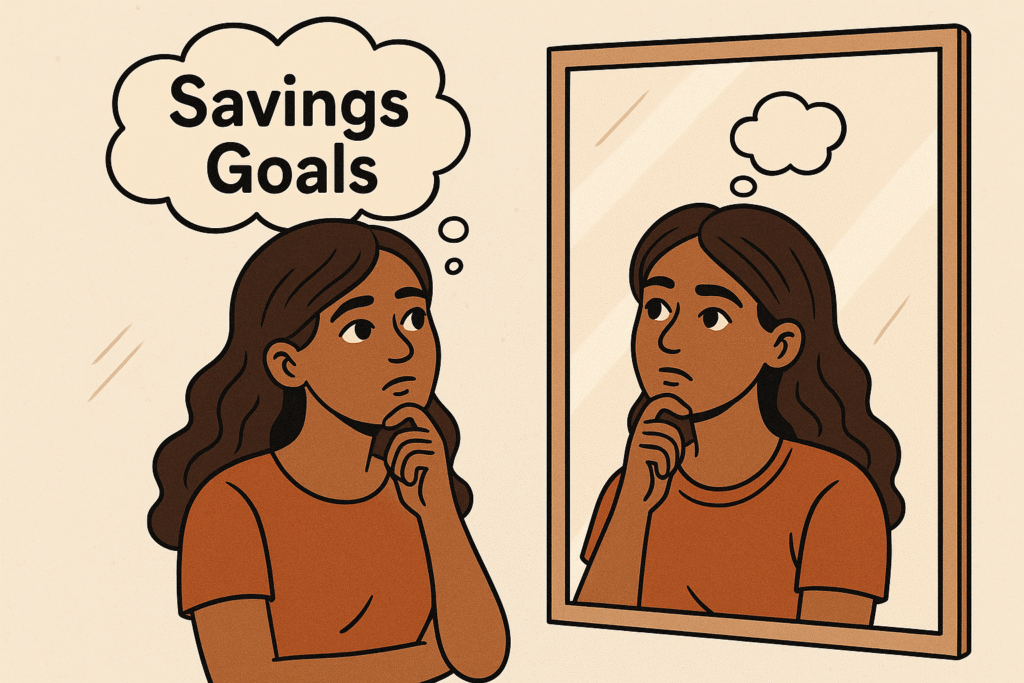
You know how everyone talks about their “savings goals” like it’s a fun hobby or something? Like, “Oh, I’m saving for a vacation” or “I’m saving for a new car.” And you nod along, thinking, “Yeah, that sounds nice. Must be nice to have a goal like that.” But when it’s your turn to talk about savings goals, the reality check hits. Do you even have a savings goal that feels like it’s within reach? Or are you just trying to scrape by, hoping that maybe one day you’ll have enough for whatever it is you should be saving for?
Listen, I’ve been there. And let me tell you, I’ve learned a lot about setting and actually achieving savings goals. Spoiler alert: it wasn’t just a matter of magically having money appear. It took discipline, focus, and sometimes a whole lot of trial and error. But I’m not here to tell you “this is what worked for me,” and leave you high and dry. I want to walk you through how you can set savings goals that make sense for you, based on your real life, without any confusion, just a solid plan that you can actually stick to.
What Are Savings Goals, Anyway?
First off, what exactly are savings goals? You’ve probably heard the term tossed around, but let’s break it down.
Savings goals are targets you set to put money away for specific purposes. They can be anything from a big, long-term goal like saving for your dream home or your kids’ college funds to smaller, short-term goals like building an emergency fund or saving for a family vacation. The key is that you have a clear idea of why you’re saving, and that your goal is realistic enough that you can actually reach it.
Now, if you’re sitting there thinking, “Well, I should be saving, but I’m not even sure where to start,” you’re not alone. Most people struggle with this. And that’s exactly why I want to help you map it out in a way that fits you and not some Pinterest-perfect idea of what “good savers” do.
My Savings Story: From Scraping By to Saving Big
Let’s get personal for a second. A few years ago, I was in the same boat. My family and I were living paycheck to paycheck, and I had no clear idea of how to actually make saving money a part of our reality. We were doing okay, but we weren’t exactly thriving. I knew something had to change, but where do you even begin when you’re barely keeping up with bills and the occasional impulse purchase?
Here’s what happened: I decided I was done being overwhelmed by my finances. I had this crazy idea: I was going to save $18,000 in one year, even though we were living on a single income, and I had three kids to take care of. It wasn’t easy. It took serious discipline, but the results spoke for themselves. That was the year I stopped just “getting by” and actually started taking control of my finances. And that goal wasn’t just about putting money aside for the sake of it; it was about making sure we had security, opportunities, and most importantly, freedom.
Fast forward to now, and I’m currently focused on saving for our dream home and we are up over $34,000! Big goals require serious effort. And trust me, it’s a lot easier to stay motivated when you’re working toward something specific rather than just thinking, “I need to save money.” And even though we are still living paycheck to paycheck, it feels so good to have been able to save that much money and be too worried about the very near future.

Setting Realistic Savings Goals That You Can Actually Achieve
The hardest part of setting savings goals is figuring out what’s actually realistic for you. It’s easy to set goals that sound good in theory but are completely out of reach. That’s why it’s important to focus on what you can control, and break things down into smaller, actionable steps. Here’s a simple guide to help you create savings goals that are doable:
- Make your goals specific
Don’t just say, “I want to save money.” Set a specific goal, like “I want to save $500 for a family vacation by the end of the year.” The more specific you are, the easier it is to figure out how much you need to save each month. - Break it down into small, manageable amounts
Once you know how much you need, break that number down into smaller amounts. If your goal is $500 for a vacation, and you have 12 months to save, that’s just about $42 a month. That’s way more achievable than thinking about the $500 all at once. - Be flexible
Life happens. Maybe you can’t stick to your exact savings plan every single month, but that’s okay. As long as you’re being consistent and adjusting when needed, you’ll still make progress toward your goal. - Set milestones
It’s always nice to celebrate the small wins along the way. Whether it’s a small chunk of your savings goal or a month where you save more than expected, reward yourself. It’ll keep you motivated. - Track your progress
Keep tabs on how you’re doing. Seeing your progress is a huge motivator to keep going, and it gives you a chance to adjust things if needed.
How I Make Saving Easier (And How You Can Too)
When you’re balancing family, work, and everything else in between, saving money can feel like another thing to juggle. But it doesn’t have to be overwhelming. One of the best ways I’ve made saving easier is by using savings challenges. They’ve been a game changer in helping me stick to my goals.
I created a 75 savings challenge bundle to make it easier for you to save for whatever life throws your way. Whether you want to save for a rainy day, a vacation, or something bigger like your dream home, these challenges break it down into bite-sized, manageable amounts. And they’re fun! (Yes, saving can be fun, I swear.) Get them down below!

Why Savings Challenges Work
Here’s why I swear by savings challenges: they keep you on track. Instead of looking at your goal and feeling overwhelmed, you can focus on the challenge in front of you. Plus, there’s a sense of accomplishment when you fill in a box or color in a chart, small victories that build up to big results.
If you’re serious about saving, grab my 75 savings challenges bundle. It’s a total lifesaver for anyone who’s tired of thinking about saving but never quite doing it. These challenges are customizable, so you can save for exactly what you need, whether it’s $1,000 for an emergency fund or $50,000 for a down payment on your dream home.
Taking Action on Your Savings Goals
Now that you have a plan in place, it’s time to take action. No more putting it off. No more “I’ll start next month.” You’ve got this! Whether you start with small, easy challenges or dive straight into the big ones, the important thing is that you’re making progress. And the more progress you make, the more confident you’ll become in your ability to hit your savings goals.
Final thoughts: It’s All About Taking One Step at a Time
Setting savings goals is one thing. Reaching them is another. But let me tell you, if I can save $18,000 in a year while raising three kids, you can definitely save for your own goals. It’s all about having a plan, staying focused, and using the right tools (like my 75 savings challenges) to keep you on track.
So, what are your savings goals? And how will you get started?
If you’re ready to take control of your savings, grab your 75 savings challenges bundle today and start working toward your goals, one challenge at a time. You’ve got this!
