
Table of Contents
Managing money feels like a full-time job sometimes. Between rent, groceries, saving for that dream vacation, and trying not to cry every time you check your bank account… it’s A LOT.
And if you’re anything like I was, you’ve probably got receipts shoved in a drawer, random notes scribbled on sticky pads, and a budget “somewhere” in your notes app that you forgot to update three weeks ago.
Yeah. Been there.
That’s why I ditched the paper mess and started using a digital expenses and income tracker—and I swear, it changed everything.
It’s easier. It’s cleaner. And best of all? It actually helped me stick to a budget without losing my mind.
Why I Ditched Paper for a Digital Budget Planner
Okay confession time: I used to be a paper planner girly. I loved the highlighters, the sticky tabs, the cute budgeting notebooks.
But also? It was too much.
Receipts everywhere. Scribbled numbers that made no sense later. Pages I’d forget to fill out. Entire weeks just… missing.
And one day I had this lightbulb moment like:
“Why am I making this harder than it needs to be?”
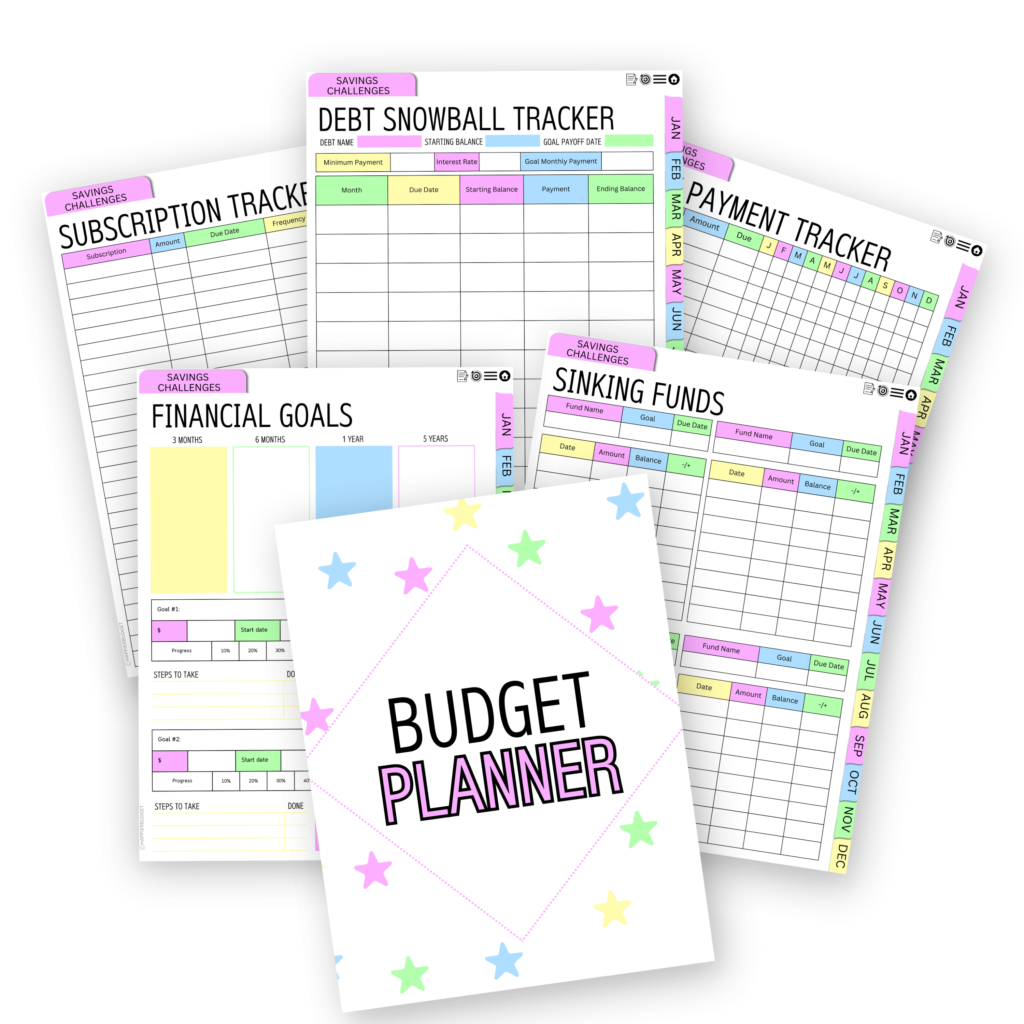
So I made the switch to a digital budget planner—aka an expenses and income tracker that actually works for my brain and my real life.
It’s all in one place, it’s cute, and it doesn’t judge me when I forget to update it for a few days.
Why a Digital Expenses and Income Tracker Works for Me
Here’s the thing: life is BUSY. Between work, kids, appointments, random emergencies, and just trying to squeeze in 5 minutes of peace—you don’t have time to sit down and do complicated math on a piece of paper.
A digital tracker takes all the stress out of it. Here’s how:
- It’s all in one place
No more searching through your bag for that one receipt. No more flipping through pages trying to remember what you spent on groceries last week. Everything’s neat, organized, and right there when you need it. - It’s customizable
Your budget isn’t going to look like anyone else’s—and it shouldn’t. A good digital tracker lets you set your own categories, savings goals, and monthly focus points. You want to track Target runs? Go for it. You want to set a $25-a-week coffee budget? Love that for you. - It’s motivating
Listen, watching your savings go up or your debt go down in real-time? Addicting. It’s like getting a gold star from yourself. Every time I see that progress bar fill up even a little bit, I feel like a budgeting queen. - It’s eco-friendly
You know what doesn’t give me anxiety anymore? My desk. Switching to a digital expenses and income tracker meant less mess, less waste, and less overwhelm. My sanity thanks me daily.
How I Use My Digital Budget Planner to Stay on Track
If you’re wondering how to make this work in real life, I got you.
Here’s what my monthly money routine looks like:
1. Track Every Dollar (Yes, Every Single One)
Yup, I write it in myself—and I actually like it that way.
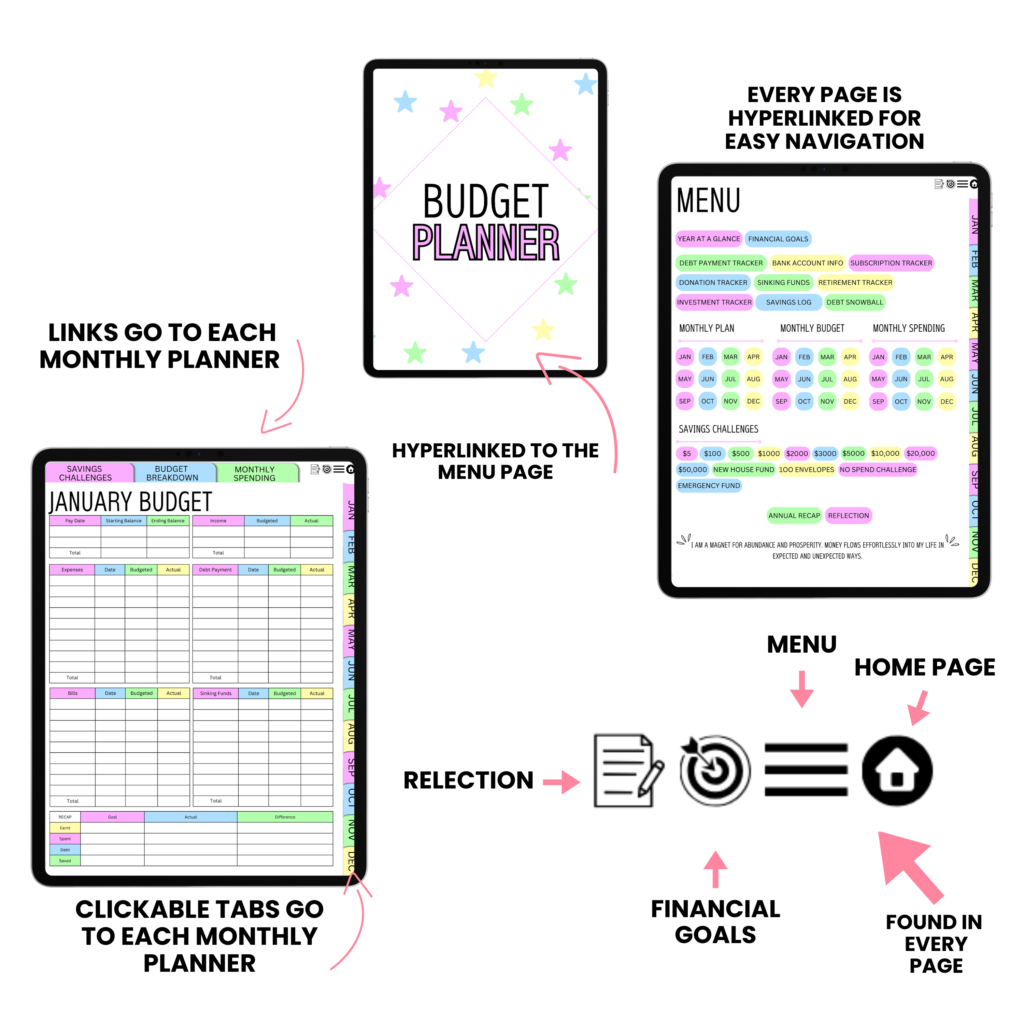
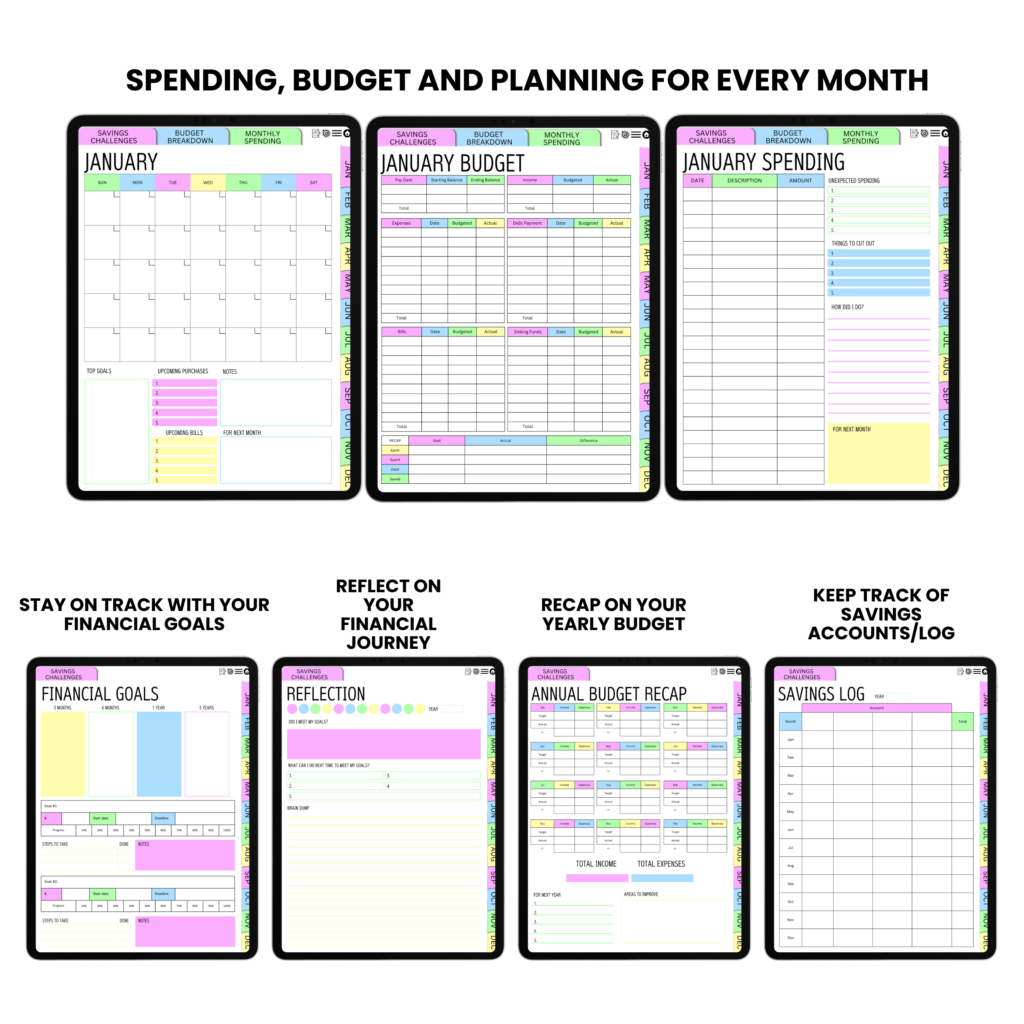
There’s something about opening up my planner, flipping to the expenses page (with just one tap, thanks to those hyperlinks ), and jotting it down that makes me so much more mindful of what I’m spending.
No complicated formulas. No techy setup. Just me, my stylus, and a cute digital planner that keeps me on track.
2. Set Realistic Goals
Since this planner isn’t doing math for me, I keep it simple:
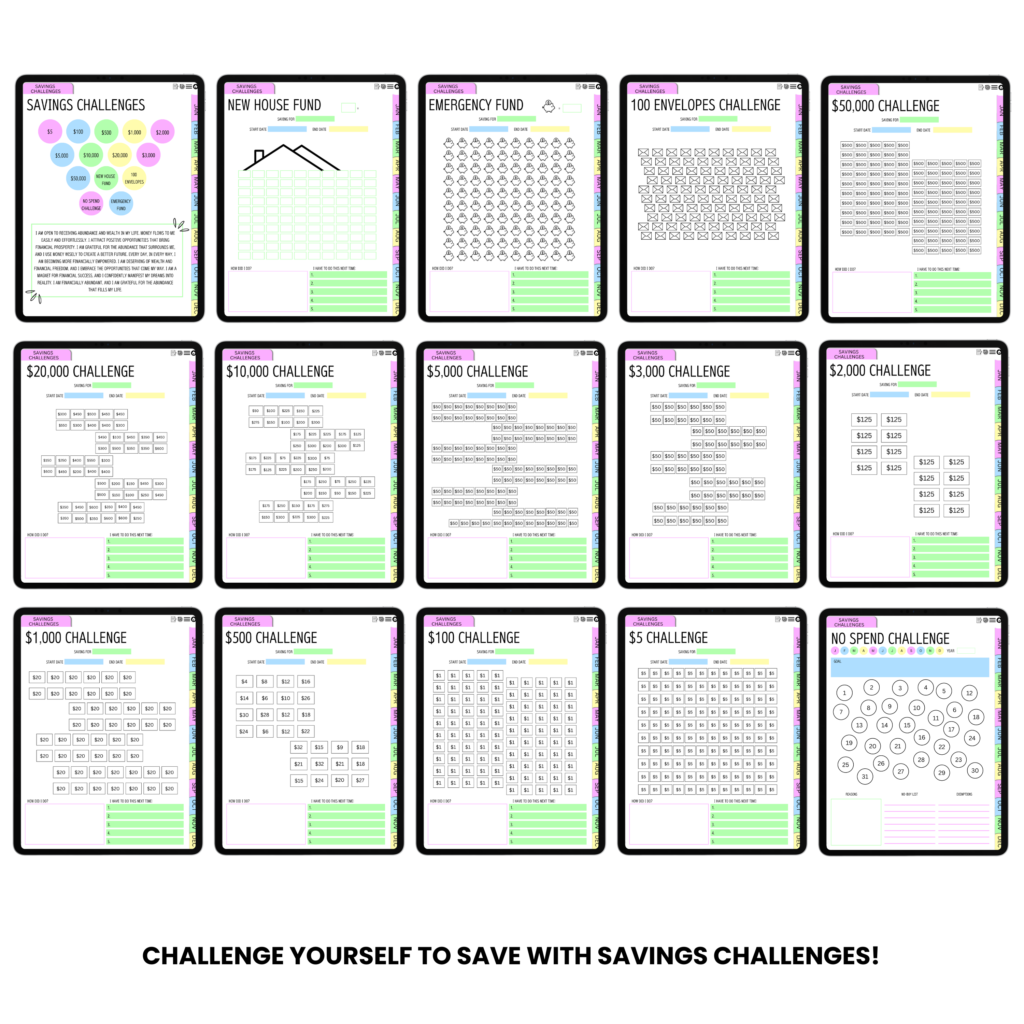
If I’m saving $1,000 in 6 months, I break it down on the savings tracker page and write in how much I want to hit each week. I love that I can flip between goals, trackers, and monthly pages super fast with the built-in links.
And honestly? Checking things off with my Apple Pencil gives me a weird level of joy.
3. I Do a Monthly Budget Check-In
At the end of every month, I go through my planner to review:
- What I spent
- Where I can cut back
- What goals I hit
- And what’s coming up next
It’s manual, yes—but it feels like a ritual, not a chore. I put some music on, open Goodnotes, and check in with my money. It makes me feel in control again.
Why You Need an Expenses and Income Tracker in Your Life
If you’ve made it this far, let me say this:
You deserve to feel in control of your money.
Not overwhelmed.
Not lost.
In control.
And the truth is, you can’t manage what you’re not tracking.
A digital expenses and income tracker is like having a personal assistant for your finances. It takes the guesswork out of budgeting and helps you stay focused on the goals that matter.
Want to finally build an emergency fund?
Pay off that credit card?
Plan a vacation that doesn’t end in panic?
This is how you start.
Ready to Get Started? Try My Budget Planner!
If you’re done with boring spreadsheets and want something you’ll actually look forward to using, you need this planner.
Check out my hyperlinked digital budget planners—they’re designed to be used in Goodnotes or other annotation apps, and they’re perfect if you want a cute, functional system without all the complicated tech.
✔️ Easy to navigate with clickable tabs
✔️ Comes with expense + income trackers
✔️ Works on iPad with Apple Pencil or stylus
✔️ Zero formulas, all vibes
Because your budget should be organized and aesthetic.
Digital Budget Planner 4 | 66 Pages | Goodnotes
Take control of your finances with our digital budget planner for beginners! Designed to work seamlessly with Goodnotes and any note-taking app you love, this 66-page planner is the perfect tool to help you ditch money stress and start building the financial life you deserve. Plus, every page is hy…
Final thoughts
Switching to a digital budget planner was one of the best decisions I’ve ever made for my finances—and honestly, for my mental health too.
It’s helped me:
✔️ Stay consistent
✔️ Stay motivated
✔️ And finally stop asking “where did all my money go?”
If you’re feeling overwhelmed, just start small. Track your next purchase. Set a tiny savings goal. Use tools that make it easier, not harder.
Your money doesn’t have to feel chaotic. You just need a better system.
And I promise—you’re capable of so much more than just “getting by.”
Here’s to less stress, more savings, and the financial glow-up you deserve.
You’ve got this!